

Quick takeaway
For most people, a sauna session should be short, comfortable, and easy to recover from. Beginners can start with 5 to 10 minutes. Many experienced users stay around 10 to 15 minutes, depending on heat, health, hydration, and comfort.
More time is not automatically better.
Why sauna timing matters
A sauna should support your body, not challenge your limits.
That is the most important rule. Heat can feel calming, but it is still a physical stress. Your heart rate rises, you sweat, and your body works to cool itself.
That is why the right session length depends on the person, the sauna temperature, the type of heat, and how you feel that day.
As Andrei Fimine often says to customers, a good sauna routine should feel like something you want to repeat. If it feels extreme, you are using it the wrong way.
A good starting point
If you are new to sauna, start with 5 to 10 minutes.
That is enough time to feel the heat without pushing too far. Sit comfortably, breathe normally, and pay attention to your body. When you step out, cool down gradually and drink water.
Once you know how your body responds, you can slowly extend the session. Many regular sauna users prefer 10 to 15 minutes. Some experienced users may stay longer, but there is no need to treat longer sessions as a goal.
Consistency matters more than endurance.
Can you do more than one round?
Yes, many people enjoy sauna in rounds.
A simple routine might look like this:
- First round: 5 to 10 minutes
- Cool down: step outside, sit, drink water, and let your body settle
- Second round: around 10 minutes if you still feel good
- Final cool-down: no rush, no shock, no pressure
The cool-down matters as much as the heat. It gives the body time to recover and helps the whole ritual feel balanced.
When to leave the sauna
Leave the sauna right away if you feel:
- dizzy
- lightheaded
- weak
- nauseous
- short of breath
- confused
- overheated
- uncomfortable
Do not wait to push through. Sauna is not a competition.
The Government of Canada gives simple heat safety advice that applies well here: stay hydrated, cool down when needed, and pay attention to how your body responds in hot conditions.
This is especially important after exercise, after alcohol, during illness, during pregnancy, or if you have heart, blood pressure, circulation, or heat-sensitivity concerns.
What changes in an outdoor sauna?
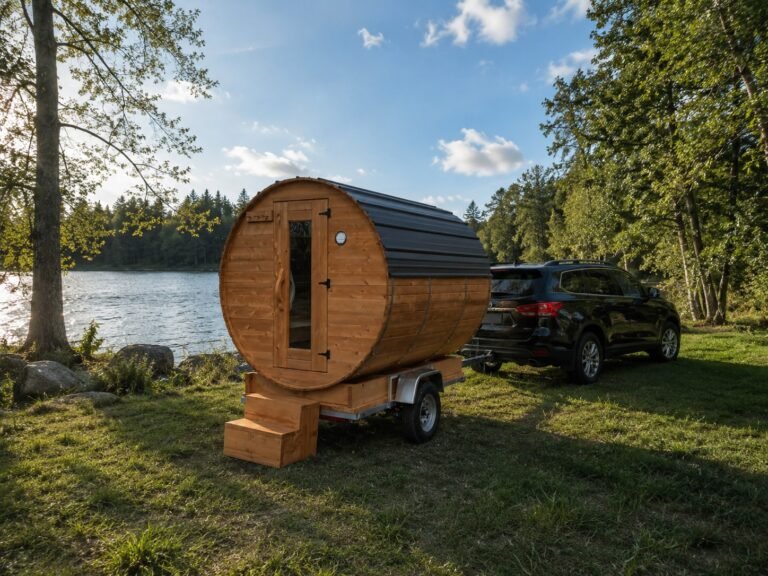
Outdoor saunas make cooling easier because fresh air is part of the ritual.
In a SaunaSpa outdoor sauna, many customers naturally follow a rhythm: heat, step outside, cool down, drink water, repeat if comfortable.
That outdoor pause matters. It helps the experience feel balanced, especially in Canadian winter, where the contrast between deep heat and cold air is part of the pleasure.
But cold air should not be used as an excuse to overdo the heat. Your body still needs time to recover.
Traditional sauna vs infrared timing
Traditional saunas usually operate at higher air temperatures than infrared saunas. Infrared saunas often feel easier for some people because the air temperature is lower, but that does not mean you should ignore your body’s limits.
At SaunaSpa, the focus is traditional outdoor sauna bathing: real heat, cedar, hot stones, and a full-room heat experience.
For that kind of sauna, shorter sessions are usually the cleaner starting point.
FAQ
How long should a beginner stay in a sauna?
A beginner should usually start with 5 to 10 minutes and build slowly only if the session feels comfortable.
Is 20 minutes too long?
For some experienced users, 20 minutes may feel comfortable, but it should not be a target for everyone. Many people get the best experience from shorter rounds with cool-down breaks.
Should I use a sauna before or after exercise?
For most people, sauna is easier to use after exercise. Before exercise, keep it short and gentle so the heat does not drain you.
Final take
For most people, the best sauna session is moderate: 5 to 10 minutes for beginners, around 10 to 15 minutes for regular users, with cooling breaks if doing more than one round.
Step out before the heat becomes uncomfortable. Cool down slowly. Drink water. Let the body return to itself.
A good sauna routine should feel grounding, not extreme.
Next step: If you are building a home sauna routine, pair this article with SaunaSpa’s guide to sauna before or after yoga.