


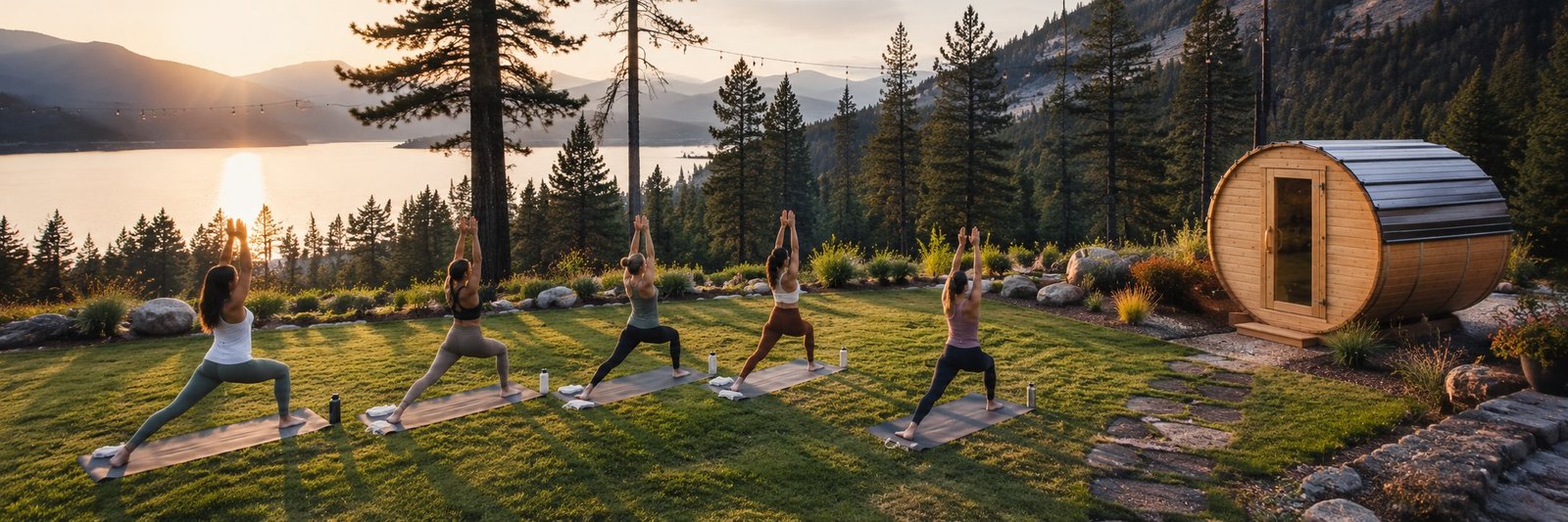
Quick Takeaway
For most yoga practitioners, the sauna is best after yoga. It helps extend the calm, support recovery, and turn the end of practice into a real reset.
A short sauna session before yoga can also work, but only as a gentle warm-up. Think 5 to 10 minutes, not a second workout.
Doing yoga inside a sauna is possible, but it should stay simple: seated stretches, breathwork, meditation, and slow mobility. Save power flows, balance poses, and deep stretching for a regular yoga space.
Why yoga and sauna fit so naturally together
Yoga and sauna work from different directions, but they meet in the same place.
Yoga uses breath, movement, control, and awareness. Sauna uses heat, stillness, and time. Together, they can help create a slower rhythm where the body warms, loosens, and settles down.
The Ordre professionnel de la physiothérapie du Québec describes yoga as a practice that can support body awareness, stress management, and relaxation. On the sauna side, the Université de Montréal reported on research connected to the Montreal Heart Institute’s EPIC Centre, noting that regular sauna use may be linked to better physical and mental health, partly through the way heat affects the cardiovascular system.
That is the useful overlap for yoga practitioners: breath, heat, recovery, and a calmer return to the body.
This does not mean sauna and yoga are magic. It means they make sense together when used with care.
What the sauna-yoga research says
There is not a large body of research on yoga and sauna together. But there is one study worth noting.
A 2019 randomized pilot trial looked at sauna yoga in healthy older adults. The yoga was done in moderate heat, around 50°C, over eight weeks. The sauna-yoga group saw strong improvement in lower-body flexibility compared with the control group, especially in the chair sit-and-reach test.
The authors still described the findings as preliminary, which matters. Heat can support the practice, especially for gentle movement and flexibility, but it should not replace good judgment.
Sauna before yoga: use it as a warm-up
A sauna before yoga can be useful when your body feels stiff, cold, or slow to open.
This works best before a gentle morning practice, mobility session, restorative flow, or breath-led routine. The heat can help the body feel more relaxed before movement begins.
Keep it short. Five to 10 minutes is enough for most people. Step out before you feel tired, drink water, and start with slow movement.
Use sauna before yoga when the goal is:
- gentle warm-up
- light stretching
- mobility
- breathwork
- easing into practice
Avoid it before a hard class, hot yoga, or anything that already involves heavy sweating. Too much heat before movement can make you feel drained instead of ready.
Sauna after yoga: the stronger everyday choice
For most yoga practitioners, sauna after yoga is the better routine.
After practice, the body is already warm. The breath is slower. The nervous system is quieter. A sauna session can extend that feeling instead of cutting it short.
This is where the ritual works best: practice first, heat second, cool down slowly.
Cleveland Clinic notes that sauna use may help soothe sore muscles and reduce stress. That makes it a natural fit after strength-based yoga, long holds, deep stretching, outdoor practice, or stressful workdays.
The point is not to push harder. The point is to recover better.
Can you do yoga inside a sauna?
Yes, but keep it calm.
A sauna is not the place for power yoga, fast flows, balance challenges, or aggressive stretching. Heat can make the body feel more flexible than it really is. That can tempt people to force a deeper stretch, which is not the goal.
Inside the sauna, stay with simple work: seated breathing, meditation, neck and shoulder release, easy seated twists, gentle forward folds, or light ankle, hip, and wrist mobility.
Think of it as sauna-supported stretching, not a full yoga class.
Mayo Clinic notes that hot yoga and high-temperature exercise can increase the risk of heat-related illness for some people, especially those with health concerns, pregnancy, dehydration problems, heat intolerance, or heart disease.
A SaunaSpa note on well-being
At SaunaSpa, we believe heat should support your well-being, not challenge your limits.
Every body responds differently to yoga, sauna, heat, cold, and recovery. Your routine should match your health, fitness level, hydration, experience, and comfort with heat. If something feels wrong, stop. If you have a medical condition or are unsure, speak with a qualified health professional before combining sauna with yoga or intense physical activity.
A good sauna ritual should leave you feeling clearer, calmer, and more restored. It should never feel like a test.
Why an outdoor Red Cedar sauna adds something different
Yoga is not only about movement. It is also about setting.
That is where an outdoor Western Red Cedar sauna has a natural advantage. The heat, the quiet, the cedar aroma, and the step outside all help the ritual feel more grounded. Real Cedar notes that Western Red Cedar is valued in saunas for comfort, insulation, and its aromatic fragrance.
SaunaSpa builds outdoor Red Cedar saunas, not indoor sauna rooms. That matters for yoga practitioners who want the ritual to feel less like a gym add-on and more like a real reset. Practice indoors or outdoors, step into heat, cool down slowly, and let the body come back to itself.
This is also why an outdoor sauna works so well for yoga studios, wellness spaces, private homes, and retreat-style settings. It gives people a place to stay with the practice after the mat is rolled up.
A simple sauna and yoga routine
Here is the cleanest way to combine both.
Before yoga, optional:
Use 5 to 10 minutes of sauna if you want to warm up. Then cool down briefly, drink water, and begin with gentle movement.
Yoga practice:
Move normally. Do not chase extra range just because the body feels warm.
After yoga:
Use 10 to 15 minutes of sauna if you feel good. Let the heat support recovery, calm, and breath.
After sauna:
Cool down gradually. Drink water. Give the body a few minutes before jumping into the next thing.
If you use a cold plunge, treat it as an extra step, not a requirement. It can add a sharper reset, but the foundation is still simple: move, heat, cool down, hydrate.
Safety tips for yoga practitioners
Keep the routine simple and listen to the body.
Start with shorter sauna sessions. Drink water before and after. Avoid alcohol before sauna use. Step out if you feel dizzy, weak, nauseous, overheated, or uncomfortable.
Do not do intense yoga inside a sauna. Do not force deep stretches in high heat. Do not add sauna after hot yoga if you already feel depleted.
Health Canada recommends taking heat seriously: stay well hydrated, cool down when needed, and pay attention to how your body responds in hot conditions. The Government of Canada also notes that saunas and hot tubs should generally be avoided during pregnancy, especially in the first trimester, because prolonged high-temperature exposure may increase risk.
For yoga practitioners, the rule is simple: heat should support the practice, not become the challenge.
If you are pregnant, heat-sensitive, dehydrated, or managing heart, blood pressure, or other medical conditions, ask a health professional before using a sauna with yoga.
Final take
So, should you use a sauna before or after yoga?
For most yoga practitioners, start with sauna after yoga. It is the cleaner recovery ritual. It supports calm, breath, and the feeling that practice does not end the second you roll up the mat.
Use sauna before yoga when you want a gentle warm-up. Keep it short and light.
And if you do yoga inside the sauna, keep it simple. Breathwork, meditation, and gentle mobility belong there. A hard flow does not.
Yoga teaches you to listen to the body. Sauna should do the same.
FAQ
Is sauna better before or after yoga?
For most people, sauna is better after yoga. It helps extend relaxation and supports recovery after movement. A short sauna session before yoga can work as a gentle warm-up, but it should not leave you tired before practice.
Can you do yoga inside a sauna?
Yes, but keep it gentle. Breathwork, meditation, seated stretches, and slow mobility are the best fit. Avoid power yoga, fast flows, balance poses, and aggressive stretching in high heat.
Does sauna help flexibility?
Sauna heat can make the body feel warmer and more relaxed, which may make gentle movement feel easier. One small sauna-yoga pilot study found improved lower-body flexibility in healthy older adults, but the evidence is still preliminary.
Is sauna safe after hot yoga?
It can be too much for some people. Hot yoga already raises body temperature and causes heavy sweating, so adding sauna afterward requires caution. Cool down first, drink water, and skip the sauna if you feel lightheaded, overheated, or dehydrated.
How long should yoga practitioners stay in a sauna?
Start with 5 to 10 minutes. More experienced users may choose 10 to 15 minutes after yoga, depending on comfort and heat level. Keep the session moderate, cool down gradually, and rehydrate after.
Who should be careful with sauna and yoga?
People who are pregnant, heat-sensitive, dehydrated, or managing heart, blood pressure, or other medical conditions should speak with a qualified health professional before combining sauna, yoga, and heat exposure.

We’re honoured to be featured in WellBeing Magazine’s latest article on sauna benefits for yoga practitioners. The piece explores how sauna and yoga can work together to support recovery, flexibility, breathwork, and a deeper sense of calm. At SaunaSpa, this is exactly how we see the ritual: heat should support your well-being, not challenge your limits.