

Quick takeaway
Every sauna needs some form of air exchange. The question is not whether air matters. The question is how much ventilation is needed, where it comes from, and how to balance fresh air, heat retention, and drying after use.
For a barrel sauna, the answer depends on the heater, the build, the door fit, the roof, and the way the sauna is used.
Why ventilation matters
Good sauna air should feel hot, clean, and comfortable. It should not feel stale, heavy, or difficult to breathe.
Ventilation helps bring in fresh air, remove excess humidity after use, and support a more comfortable session. It also helps the wood dry properly, which is especially important in an outdoor sauna exposed to changing weather.
That is why it is too simplistic to say that a barrel sauna never needs ventilation. It is also too simplistic to say that every barrel sauna needs a complex mechanical system.
The right answer is more practical.
The manufacturer’s view
When our teams install a sauna, airflow is not treated as a generic checkbox.
The sauna, heater, door, base, roof, and usage pattern all matter. A compact barrel sauna used by two people is different from a larger model used by a family or wellness space.
Andrei Fimine’s position is simple: airflow should support the experience without making the sauna feel drafty or inefficient.
That means looking at:
- heater type
- sauna size
- intake and exhaust placement
- door fit
- how the sauna dries after use
- whether the sauna feels fresh or stale during sessions
Natural air exchange in a barrel sauna
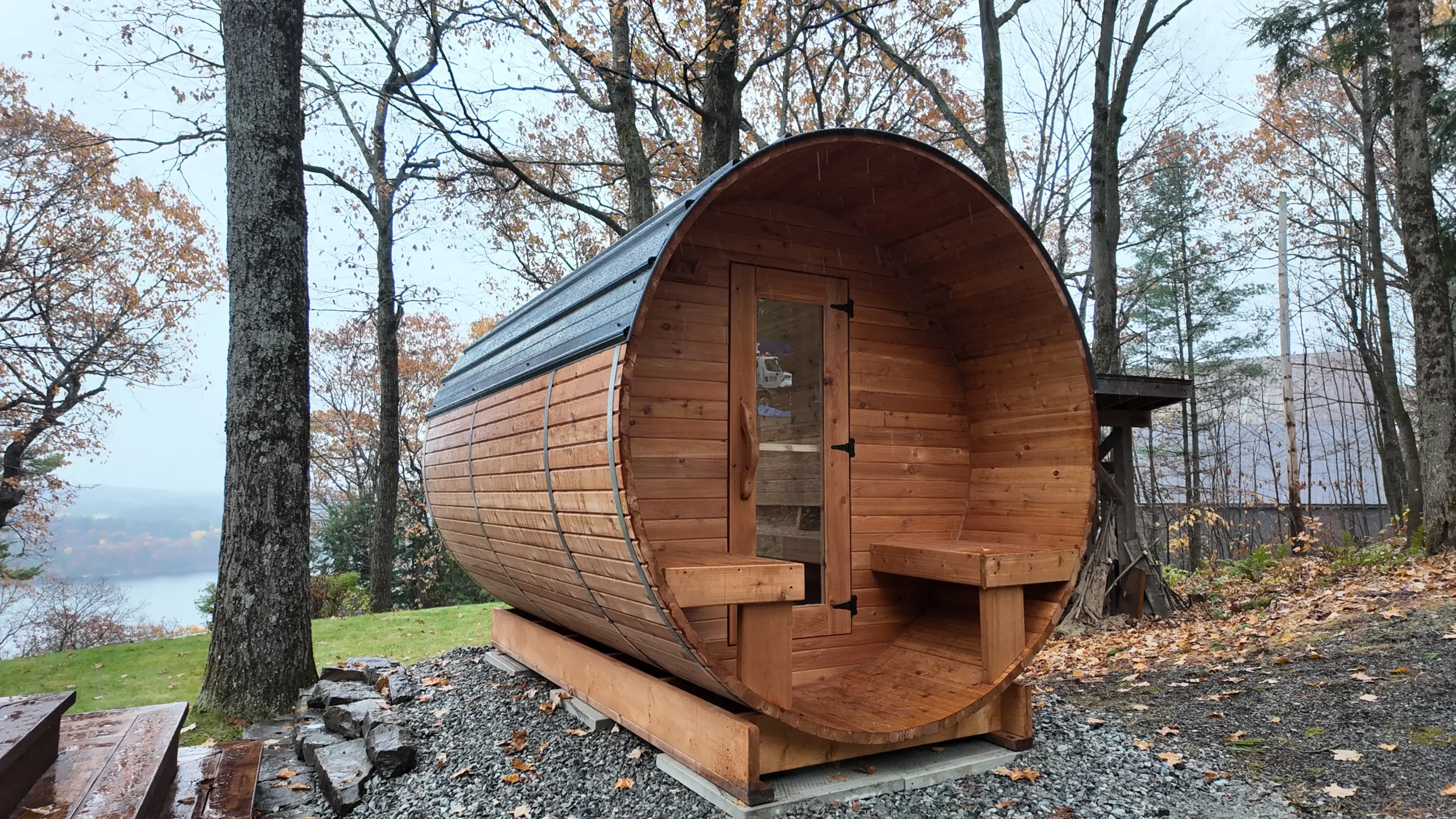
A traditional outdoor barrel sauna often has natural air movement through small construction gaps, door movement, and normal opening and closing between rounds.
That natural exchange can be enough for many simple barrel sauna layouts, especially when the sauna is used by a small number of people and the door is opened between rounds.
But natural air movement is not the same thing as ignoring airflow. If the sauna feels stale, stays damp too long, or does not dry properly, ventilation needs to be reviewed.
Heater type changes the conversation
The heater matters.
Wood-burning heaters and electric heaters can have different ventilation requirements. Manufacturers may specify where intake and exhaust openings should be placed. Those instructions should be followed.
For example, Harvia gives guidance for gravity ventilation and mechanical ventilation, including where fresh air and outlet vents should be located depending on the setup.
The difference matters:
- Electric heaters often require careful air placement around the heater and sauna room.
- Wood-burning heaters may need additional combustion air considerations.
- Larger saunas may need more deliberate air movement than compact models.
- High-use saunas need stronger drying habits after each session.
A good sauna builder should never make blanket claims. The sauna, heater, and installation need to work together.
Heat circulation is not the same as ventilation
The barrel shape helps heat move smoothly.
Because the interior is compact and curved, there are fewer hard corners where air can feel trapped. Warm air rises, moves around the rounded ceiling, and creates a full, immersive heat experience.
This is one reason barrel saunas warm quickly and feel efficient.
But heat circulation and fresh air exchange are not the same thing. A sauna can circulate heat well and still need proper drying and airflow.
Too much ventilation can also be a problem
More air is not always better.
If a sauna has too much cold air entering during use, it may take longer to heat, feel drafty, or lose the balanced heat people expect from a traditional sauna. This is especially noticeable in winter, when outdoor air is cold and the sauna is working harder.
The goal is balance: enough fresh air to keep the session comfortable, not so much that the sauna loses its heat character.
Moisture management connects to waterproofing
Ventilation also connects directly to moisture control.
A sauna exposed to rain, snow, and freeze-thaw cycles needs exterior protection. A sauna used regularly also needs interior drying. Both matter.
FAQ
Does every barrel sauna need vents?
Every sauna needs air exchange, but not every sauna needs the same vent setup. Heater type, sauna size, and installation details matter.
Can too much ventilation make the sauna worse?
Yes. Too much cold air can make the sauna drafty and less efficient, especially in winter.
Should I leave the door open after sauna use?
Yes. Leaving the door open after the session helps warm, humid air escape and helps the interior dry.
Final take
A barrel sauna does need air exchange. It may not need a complicated ventilation system, but it does need a smart approach to fresh air, heat retention, and drying.
The best sauna feels warm, clean, and balanced. The best-built sauna also dries properly after use.
That is the standard that matters.
Next step: Before installation, confirm your heater type and ventilation plan so the sauna is built for both comfort and long-term durability.