

Quick takeaway
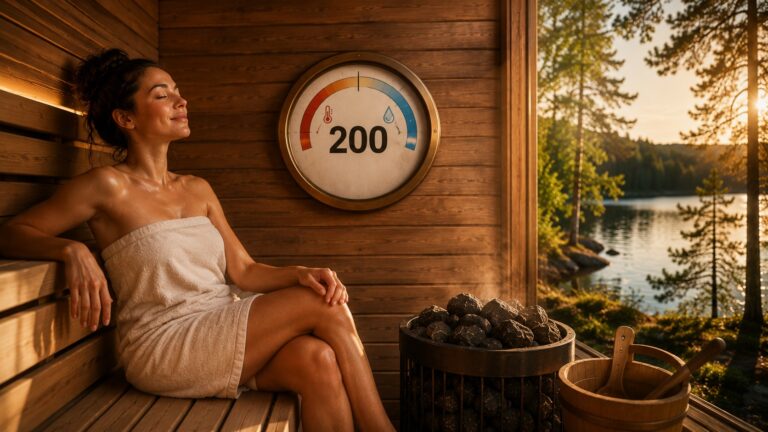
Indoor and outdoor saunas can both offer a good heat experience, but they do not feel the same. An indoor sauna is about convenience inside the home. An outdoor sauna is about space, contrast, fresh air, and a stronger ritual.
For SaunaSpa, the focus is outdoor sauna because the setting is part of the experience.
What an indoor sauna does well
An indoor sauna can be convenient.
It is close to the bathroom, protected from weather, and easy to access without stepping outside. For some homes, condos, gyms, and wellness facilities, that convenience makes sense.
But indoor saunas also require careful planning. Ventilation, moisture control, electrical work, wall protection, drainage, and building integration all matter. A sauna is not just a hot closet. Heat and humidity need to be managed properly inside the structure.
That is why indoor sauna projects can become more involved than they first appear.
What an outdoor sauna does differently
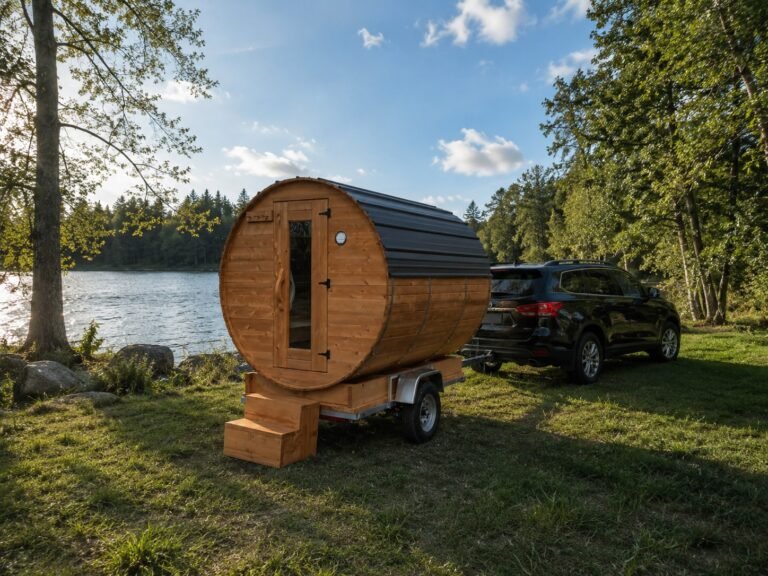
An outdoor sauna creates a separate space.
That separation is one of its biggest strengths. You leave the house and enter a different rhythm. The heat feels more like a ritual because the setting changes around you.
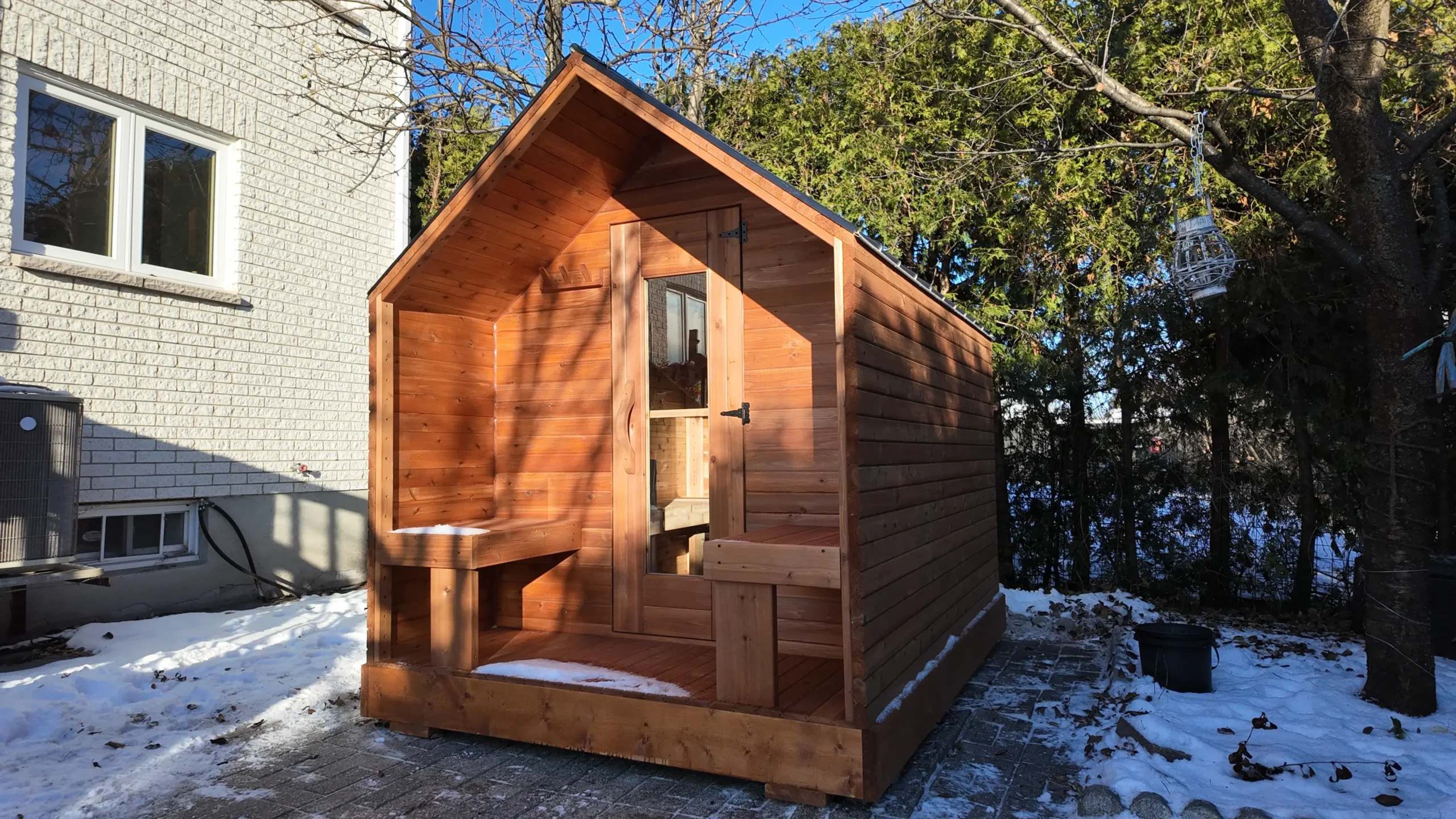
Outside, the cool-down becomes part of the experience. You can step into cold air, sit on a porch, look at the yard, use a cold plunge, or simply let the body cool gradually between rounds.
The sauna is no longer just a room. It becomes a destination on your property.
What Andrei hears from customers
When SaunaSpa customers compare indoor and outdoor options, Andrei Fimine usually hears one theme: they want the sauna to feel like a real escape without leaving home.
An outdoor sauna answers that need because it creates distance from the house. You physically step away from work, screens, chores, and noise.
That small distance matters. It helps the sauna feel like a ritual instead of another room.
Why outdoor sauna works so well in Canada
Canadian weather gives outdoor sauna its character.
In winter, the contrast between cold air and deep heat is powerful. In spring and fall, the sauna gives outdoor space a reason to stay useful. In summer, evening sauna sessions can feel calm and restorative after a long day.
This year-round use is a major advantage. Instead of treating the backyard as seasonal, an outdoor sauna gives it a purpose in every month.
The Harvia sauna ventilation guide is a useful reminder that sauna rooms need proper planning around heat, airflow, and drying. That planning matters whether the sauna is indoors or outdoors.
Installation differences
Indoor sauna installation is usually about integration.
Outdoor sauna installation is usually about site preparation.
For an indoor sauna, you need to think about:
- room construction
- moisture control
- ventilation
- wall protection
- electrical work
- nearby shower or drainage planning
For an outdoor sauna, you need to think about:
- a level base
- delivery access
- heater planning
- electrical planning if using electric heat
- privacy
- drainage
- weather exposure
- snow clearing and winter access
Every property is different, so the best answer depends on the site.
Maintenance differences
Indoor saunas are protected from weather, but they still need ventilation and drying.
Outdoor saunas are exposed to weather, so material and exterior protection become more important. The sauna should be built from suitable wood, placed on a proper base, protected at the roof, and allowed to dry after use.
With the right construction, an outdoor sauna can be a durable, low-stress addition to the property.
Which one should you choose?
Choose an indoor sauna if convenience inside the home is the top priority and you are ready to manage the construction requirements properly.
Choose an outdoor sauna if you want a more complete ritual: real wood, fresh air, outdoor cool-downs, seasonal contrast, and a space that feels separate from the rest of the house.
For many Canadian homeowners, that separation is exactly the point.
Final take
The difference between indoor and outdoor sauna is not only location.
It is the way the experience feels.
Indoor sauna is convenient. Outdoor sauna is immersive. Indoor sauna stays inside your routine. Outdoor sauna creates a ritual around it.
If you want the heat, the cedar, the cold air, and the sense of stepping away, outdoor sauna is the stronger choice.
Next step: Compare SaunaSpa outdoor sauna models and decide whether your property is better suited for a barrel, cube, or larger cabin-style sauna.