

Quick takeaway
Choosing an outdoor sauna is not only about picking a shape you like. The right sauna should fit your space, your climate, your heater preference, your installation conditions, and the way you actually plan to use it.
A beautiful sauna still needs to be practical.
Start with how you will use it
Before comparing models, ask a simple question: when will you use the sauna?
After training? After work? At the cottage? With family? For guests? As part of a yoga or cold plunge routine? Mostly alone, or with several people?
The answer affects the size, layout, heater, windows, porch, changing area, and placement.
A small sauna can be perfect for a couple. A larger sauna may be better for family use, rentals, retreats, or wellness spaces. More capacity is useful only if it matches your real routine.
What Andrei asks before recommending a model
When Andrei Fimine discusses an outdoor sauna with a customer, the conversation usually starts with the property, not the product.
The key questions are practical:
- Where will the sauna sit?
- How many people will use it regularly?
- Is the path clear for delivery or on-site construction?
- Is there enough electrical access for an electric heater?
- Is the base already prepared?
- Will the sauna be used mostly in winter, summer, or year-round?
- Is privacy more important than the view?
A good sauna recommendation should come from real site conditions, not only from a catalogue image.
Choose the right location
Placement is one of the most important decisions.
Your sauna should be easy to reach in winter, not only in summer. Think about snow clearing, privacy, lighting, drainage, delivery access, electrical access, and the path back to the house.
The most dramatic corner of the yard is not always the best place. The best location is the one you will use comfortably and consistently.
A good outdoor sauna should feel connected to the home, but still separate enough to create a real ritual.
Think about the base early
A sauna needs a stable, level, draining base.
That could mean concrete slabs, a properly prepared gravel pad, a reinforced deck, or another suitable foundation depending on the model and site. What matters is that the sauna is not sitting directly on soft soil and is not twisting over time.
In Canada, freeze-thaw cycles matter. A base that shifts can affect the door, the structure, and the way the sauna ages.
Do not treat the base as an afterthought.
Pick the right sauna style
Different sauna shapes create different experiences.
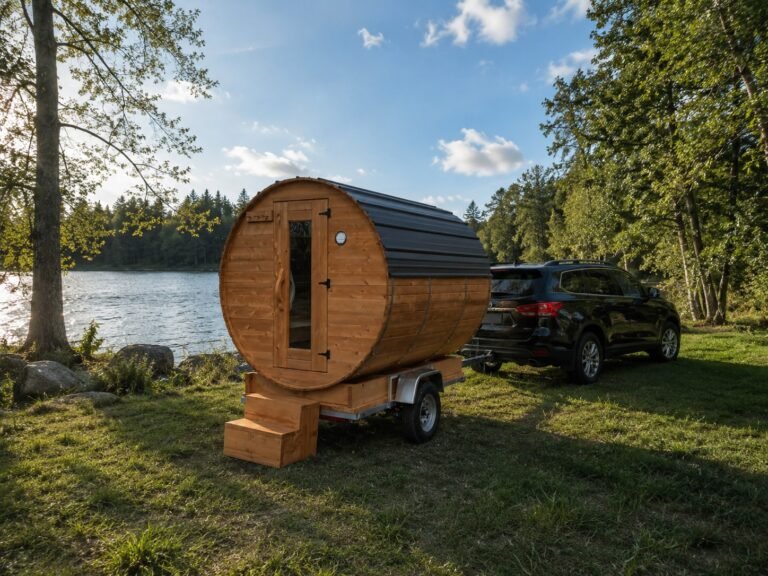
A barrel sauna is classic, efficient, and compact. A cube sauna feels more modern and architectural. A cottage-style sauna can provide more headroom, a more spacious interior, and a stronger backyard structure feeling. A porch or changing room can make winter use more comfortable.
The best choice depends on the property and the ritual you want.
Choose the heater carefully
The heater determines much of the experience.
Electric heaters are convenient, clean, and often a strong fit for residential use. Wood-burning heaters create a more traditional atmosphere, but they require the right setting, clearance, chimney setup, and local permission.
Always match the heater to the sauna size and installation requirements. Manufacturer guidance matters. For example, Harvia provides practical installation guidance around sauna ventilation and heater setup.
The heater should never be a guess.
Look at the wood and roof
For an outdoor sauna, wood quality is not just appearance.
It affects comfort, durability, scent, and how the sauna handles moisture and seasonal change. Western Red Cedar is a premium choice because it feels warm, smells natural, and performs well in sauna conditions.
Roof protection is also important. Rain, snow, and direct sun all affect the sauna over time. A proper roof cover helps protect the structure and reduces unnecessary wear.
Ask about installation, not just delivery
Delivery and installation are not the same thing.
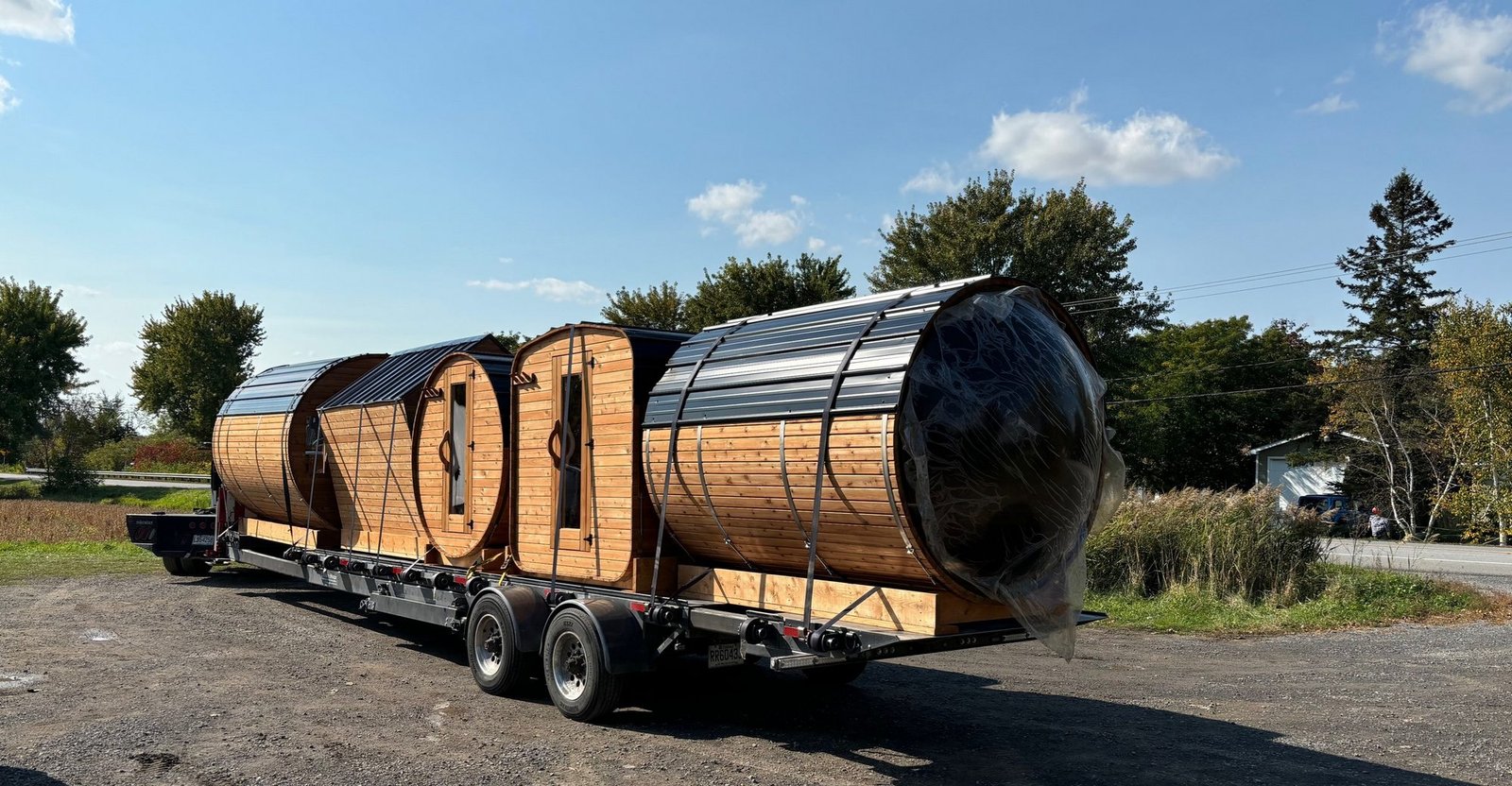
A sauna may arrive at the property, but it still needs to sit properly, connect safely, open and close correctly, drain well around the base, and perform as intended. That is why professional installation can matter as much as the sauna model itself.
Before buying, ask what is included:
- Is the sauna delivered fully assembled?
- Is it built on site?
- Who prepares the base?
- Who handles electrical work?
- Who confirms heater clearance?
- Who checks the final setup?
Clear answers at the beginning prevent confusion later.
Do not forget maintenance
A sauna is lower-maintenance than many outdoor wellness products, but it is not maintenance-free.
You need to let the interior dry after use, keep the exterior protected, watch the base, clear snow when needed, and avoid unsafe coatings inside the sauna.
Simple care done consistently is better than major repairs later.
FAQ
What is the best outdoor sauna for a backyard?
The best outdoor sauna is the one that fits your space, base, access, heater requirements, and routine. A compact barrel sauna may be ideal for one property, while a larger cube or cabin-style sauna may work better for another.
Do I need a foundation for an outdoor sauna?
You need a stable, level, draining base. The exact solution depends on the model, location, soil, deck, and installation plan.
Should I choose an electric or wood-burning sauna heater?
Electric heaters are convenient for many homes. Wood-burning heaters feel traditional but require the right site, clearances, chimney setup, and local permissions.
Final take
The right outdoor sauna should match your life, not just your Pinterest board.
Choose based on use, location, base, heater, wood, weather protection, installation quality, and maintenance. When those pieces are right, the sauna feels easy to use and natural to return to.
That is the difference between buying a backyard object and building a real heat ritual at home.
Next step: Ask SaunaSpa about site preparation, heater options, delivery access, and the model that best fits your outdoor space.